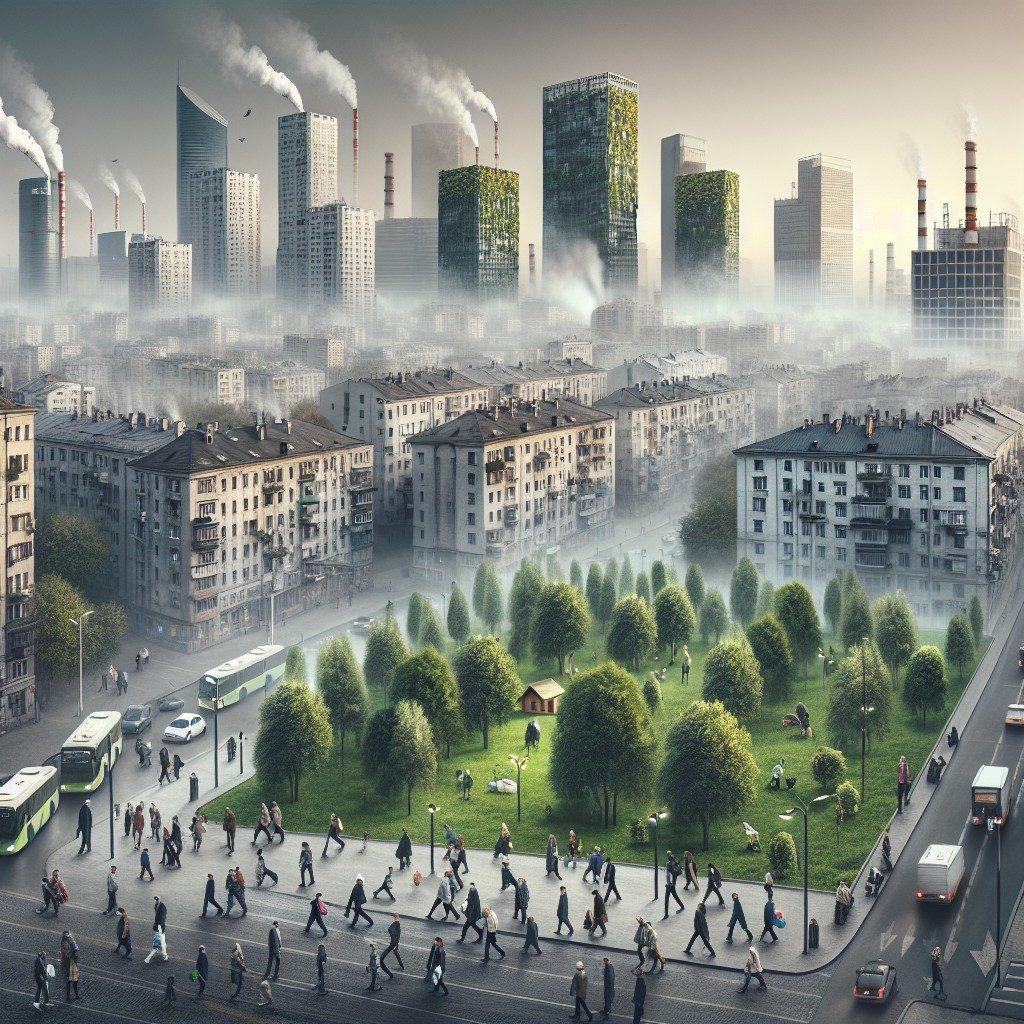
Air quality in Romanian cities has become an increasingly pressing concern as urban populations grow and industrial activities intensify. Understanding what measures effectively reduce pollution is essential for improving public health and environmental sustainability across the country.
Current Status of Air Quality in Romanian Urban Areas
Recent data indicate that many Romanian cities, including Bucharest, Cluj-Napoca, and Iași, experience air pollution levels that frequently exceed the limits recommended by the World Health Organization. The main pollutants contributing to poor air quality include particulate matter (PM2.5 and PM10), nitrogen dioxide (NO2), and sulfur dioxide (SO2), mostly emanating from traffic emissions, industrial processes, and residential heating using solid fuels.
The Impact of Traffic Reduction Measures
Traffic congestion remains one of the leading sources of urban air pollution in Romania. Efforts to reduce vehicle emissions, such as promoting public transport, expanding cycling infrastructure, and implementing low-emission zones, have shown promising results in several cities. Studies demonstrate that restricting access for older, more polluting vehicles in city centers can lead to measurable improvements in air quality within months. However, the success of these initiatives depends on comprehensive planning and consistent enforcement.
Industrial Emissions Control and Its Effectiveness
Industrial activities contribute significantly to the degradation of air quality in cities with manufacturing and energy production facilities. The Romanian government has implemented stricter controls on emissions by requiring plants to use cleaner technologies and to comply with European Union directives on air pollution. The gradual modernization of industrial infrastructure has resulted in lower emissions of harmful pollutants. Nevertheless, continuous monitoring and updating of regulations are necessary to maintain these gains.
Role of Residential Heating Practices
During colder months, residential heating contributes notably to air pollution, especially in urban areas lacking centralized heating. Many households still rely on burning wood, charcoal, or other solid fuels, which release high levels of particulate matter and toxic gases. Initiatives aimed at improving the energy efficiency of buildings and encouraging the use of cleaner heating sources, such as natural gas or electric heating, have been introduced. Such programs have started to yield improvements in air quality, though their adoption varies regionally due to economic factors.
The Influence of Green Spaces and Urban Planning
Urban green spaces can play a role in mitigating air pollution by filtering airborne particles and providing a natural barrier against emissions. Romanian cities are investing in expanding parks, planting trees, and creating green corridors to enhance air quality. However, the scale of greenery required to effectively reduce pollution levels is substantial, and green initiatives must be integrated with other pollution reduction strategies to be truly effective.
Moreover, urban planning that promotes mixed-use development and reduces the need for long commutes can indirectly improve air quality by lowering transportation-related emissions.
Conclusion: Integrated Approaches Needed for Cleaner Air
Improving air quality in Romanian cities requires a multifaceted approach combining traffic management, industrial emission controls, cleaner residential heating, and urban green development. While individual measures have shown some success, their combined and sustained implementation will be necessary to achieve significant and lasting reductions in pollution levels. Policymakers must prioritize coordinated strategies that address all pollution sources to protect public health and comply with EU air quality standards.
Frequently Asked Questions about air quality
What are the main sources affecting air quality in Romanian cities?
The primary sources impacting air quality in Romanian cities include vehicle emissions, industrial activities, and residential heating that relies on burning solid fuels.
How effective are traffic restrictions in improving air quality?
Traffic restrictions, such as limiting access for older vehicles and promoting public transport, have proven effective in reducing pollutants like nitrogen dioxide and particulates, leading to faster improvements in air quality.
Does increasing green spaces improve air quality significantly?
Green spaces contribute positively to air quality by filtering pollutants, but they work best when combined with broader pollution reduction efforts in traffic and industry.
What role does residential heating play in urban air pollution?
Residential heating, especially when using solid fuels like wood or coal, significantly contributes to air pollution during colder months, affecting overall air quality adversely.
Are current policies sufficient to meet air quality standards?
While progress has been made through stricter regulations and modernization efforts, ongoing enforcement and integrated approaches are needed for Romanian cities to consistently meet international air quality standards.